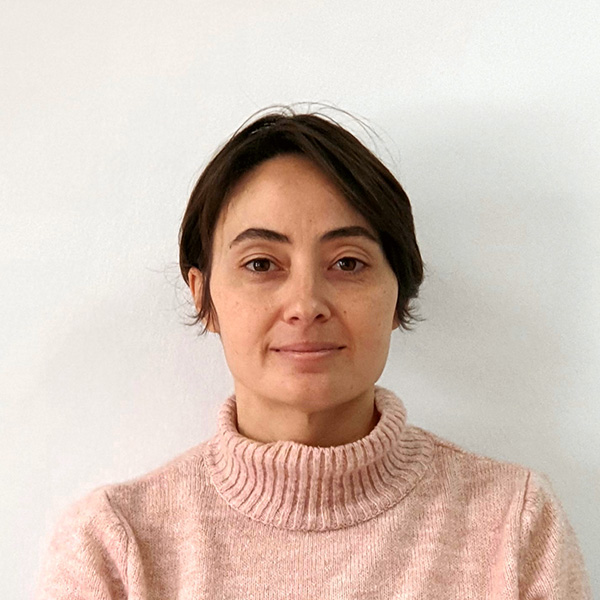
Didem Ambarlı
Assistant Professor
Office: Department of Biological Sciences, Office 224
Phone: +90 (312) 210 5159
E-mail: dambarli@metu.edu.tr
Biography
I am an ecologist and conservation scientist with over two decades of experience in biodiversity research. I currently serve as an Assistant Professor at METU, where my research focuses on the spatial and temporal dynamics of biodiversity along land-use gradients and their implications for ecosystem functioning. I have held academic and research positions in Germany (Technical University of Munich), the UK (University of Cambridge), and across Turkey, contributing to national and international conservation projects. Notably, I was a long-standing executive committee member of the Eurasian Dry Grassland Group (EDGG) and have co-organized multiple Eurasian Grassland Conferences. I have authored or co-authored over 60 scientific publications, including high-impact papers in Nature, Ecological Monographs, and Journal of Vegetation Science. A strong advocate for applied conservation, I have also led major projects funded by national and international bodies, aiming to integrate biodiversity science into land management and policy.
Research Interests
My fields of expertise include terrestrial ecology and conservation science. I aim to understand the drivers of biodiversity patterns in the global-change context. I work on the temporal and spatial dynamics of biodiversity along land-use gradients and how they are translated into the ecosystem functioning. I focus on dry grassland, temperate forest and urban ecosystems. I use multivariate statistics and GIS techniques to reveal drivers of biodiversity patterns and vegetation dynamics. I usually work at regional scales, organize field surveys to obtain data on multiple taxa such as plants, birds, and butterflies. Furthermore, I also work on the socio-economical dimension within the conservation context by compiling land-use information from state databases or questionnaires with stakeholders. My current research interests include biodiversity monitoring to reveal insect and plant communities' diversity patterns and their ecosystem functions.
Selected Publications
- Gürol, I.E., Ambarlı, D. & Zeydanlı, U. Climate and habitat types drive avian communities of the Anatolian Diagonal. Community Ecology (2025). https://doi.org/10.1007/s42974-025-00272-3
- Ambarlı, D. 2025. Spatial Patterns of Species Diversity in the Saline Vegetation of Central Anatolia, Türkiye. Türk Doğa ve Fen Dergisi 14(2): 259 – 269. DOI: 10.46810/tdfd.1667574
- Ambarlı, D. 2025. Heterogeneity is key to supporting forest-specialist butterflies. Animal Biodiversity and Conservation 47.1, 39-48.
- Seibold, S., Weisser, W. W., Ambarlı, D., Gossner, M. M., Mori, A. S., Cadotte, M. W., ... & Thorn, S. 2023. Drivers of community assembly change during succession in wood‐decomposing beetle communities. Journal of Animal Ecology, 92(5), 965-978.
- Yazlık A, Ambarlı D. 2022. Do non-native and dominant native species carry a similar risk of invasiveness? A case study for plants in Turkey. NeoBiota 76: 53 – 72.
- Seibold, S., Hothorn, T., Gossner, M.M., Simons, N.K., Blüthgen, N., Müller, J., Ambarlı, D., Ammer, C., Bauhus, J., Fischer, M., Habel, J.C., Penone, C., Schall, P., Schulze, E.-D. and Weisser, W.W. 2021. Insights from regional and short-term biodiversity monitoring datasets are valuable: a reply to Daskalova et al. 2021. Insect Conserv Divers, 14: 144-148. https://doi.org/10.1111/icad.12467
- Ambarlı, D. Simons, N.K., Wehner, K., Kämper, W., Gossner, M.M., Nauss, T., Seibold, S., Neff, F., Weisser, W., Blüthgen, N. 2021. Animal-mediated ecosystem process rates vary with different climatic and land-use drivers in forests and grasslands. https://doi.org/10.1007/s10021-020-00530-7
- Seibold, S., Gossner, M.M., Simons, N.K., Blüthgen, N., Müller, J, Ambarlı, D., et al. (2019). Arthropod decline in grasslands and forests is associated with landscape-level drivers. Nature 574: 671-677.
- Erdős, L., Ambarlı, D., Anenkhonov, O. A., Bátori, Z., Cserhalmi, D., Kiss, M., . . . Török, P. (2018). The edge of two worlds: A new review and synthesis on Eurasian forest-steppes. Applied Vegetation Science. doi:10.1111/avsc.12382
- Ambarlı, D., Zeydanlı, U., Balkız, Ö. et al. (2016). An overview of biodiversity and conservation status of steppes of the Anatolian Biogeographical Region. Biodiversity and Conservation.